Key Takeaways
- Community giving addresses local needs and strengthens social bonds.
- Different forms of giving, such as donations and volunteering, are all crucial for community health and longevity.
- Giving not only benefits the recipients but also provides personal fulfillment and raises overall happiness among givers.
The impact of community giving extends far beyond simple acts of generosity. With charitable donations, individuals and organizations alike can create lasting change in their neighborhoods. This kind of giving not only addresses urgent needs but also builds a stronger and more inclusive society where everyone can thrive. By actively engaging in charitable activities, people cultivate a deeper connection to their community and foster a collective commitment to making a difference.
Investing in the well-being of others leads to more than just temporary solutions. It lays the groundwork for ongoing development, integrating social, cultural, and economic benefits that reach all corners of the local area. Through collaborative efforts, residents play a vital role in shaping their communities’ futures. As neighbors come together around shared goals, the positive effects multiply and become woven into the fabric of daily life.
As people look for meaningful ways to support those around them, opportunities to donate to charity remain an accessible and impactful choice. Acts of giving—whether monetary, volunteer-based, or in-kind—have a ripple effect that improves overall quality of life for entire neighborhoods. Aligning personal values with local needs can help individuals find the most effective methods to get involved and make a difference.
When community giving is integrated into local culture, the result is a cycle of generosity and gratitude. This culture helps address challenges as they arise, encourages neighbors to support one another, and creates an environment where everyone feels empowered to contribute. The relationship between giving and well-being is evident in towns and cities around the country, where charitable action is often the catalyst for positive, enduring transformation.
Recent research by organizations such as the Giving USA Foundation finds that charitable activity is not only effective at helping communities in a practical sense but also supports long-term social resilience. By pooling resources, skills, and goodwill, communities can better address economic uncertainties and sudden crises.
The Impact of Community Giving
Community giving is at the heart of solving persistent local issues such as poverty, educational gaps, and housing shortages. When residents support local charities and grassroots projects, their contributions directly improve the infrastructure and services that people rely on every day. For example, in many regions, collective giving campaigns have allowed nonprofit organizations to fill funding gaps, provide scholarships, build shelters, and create after-school programs to benefit children and families in need (The New York Times).
The cumulative effect of routine giving becomes profound over time. Major initiatives often begin with small, community-driven efforts that expand as awareness grows, donations increase, and volunteer support grows. Such efforts can quickly become essential lifelines for people facing hardship, and they also boost local morale by showing what is possible when residents work together.
Forms of Community Giving
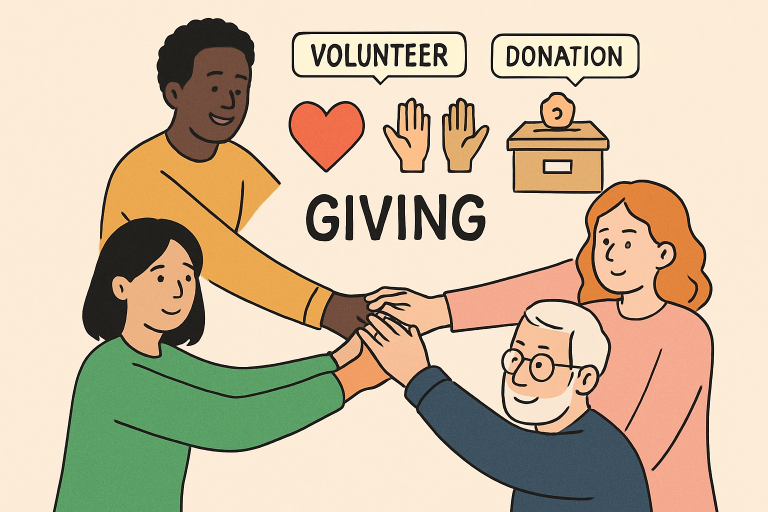
This document outlines three key forms of community support: monetary donations, volunteerism, and in-kind contributions. Monetary donations are crucial for funding nonprofit operations and initiatives, even when contributions are small. Volunteerism highlights the importance of individuals dedicating their time and skills to local causes, thereby strengthening community bonds. In-kind contributions, including goods and services, are also vital, especially during crises when demand for items such as clothing and food increases.
Personal Benefits of Giving
Contributing to the community not only helps others but can actually improve the well-being of the giver. According to various studies, acts of generosity are closely linked to increased happiness, reduced stress, and improved mental and physical health. For many, volunteering or donating can provide a renewed sense of purpose and build resilience against feelings of isolation or helplessness during challenging times.
The positive emotions associated with giving often create a feedback loop that motivates further engagement, reinforcing both personal satisfaction and the drive to help more. This sense of accomplishment can increase overall life satisfaction and promote lasting psychological benefits.
Building Stronger Communities
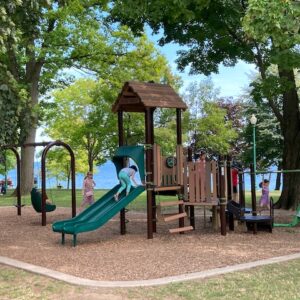
The collective power of community giving is evident when neighbors band together for the same cause. Whether it is revitalizing a local park or coordinating support for families experiencing hardship, these shared efforts foster a sense of unity and belonging. Projects like the Blue Bucket Project in Omaha highlight how joint action can bring about tangible, lasting improvements to neighborhoods, ultimately creating a sense of ownership and pride among residents.
The bonds formed through these collaborations can also provide vital networks of support when unexpected challenges arise. Community cohesion builds trust and encourages ongoing participation in civic life.
Encouraging a Culture of Generosity
Inspiring community participation in giving requires a proactive approach by local leaders and organizations. Key strategies include organizing accessible events, such as volunteer fairs and donation drives, to showcase diverse giving methods; publicly acknowledging and celebrating acts of kindness to reinforce positive behaviors; and using online platforms and social media to raise awareness. Implementing these strategies fosters a sustainable culture of generosity and strengthens community spirit by offering transparent, flexible donation opportunities.
Conclusion
Community giving stands as a powerful force in shaping better lives and healthier neighborhoods. The generosity displayed through charitable action not only solves immediate problems but builds resilience and social cohesion. As individuals and organizations continue to invest in their communities, the cumulative benefits reach far beyond the present, forging a legacy of kindness and well-being that endures for years to come.