Key Takeaways:
- Assess warehouse space and inventory needs to select the most suitable pallet racking systems.
- Implement vertical storage solutions to maximize space utilization.
- Regularly inspect and maintain racking systems to ensure safety and efficiency.
- Train staff on proper storage practices and safety protocols to ensure a safe and secure environment.
- Integrate technology to enhance inventory management and operational efficiency.
Understanding Your Warehouse Needs
To optimize warehouse storage and workflow, start with a needs assessment. Analyze your product mix: shapes, sizes, and movement frequency. Consider seasonal trends and growth forecasts. Tailor your layout based on these factors to select suitable pallet rack systems that support both current and future needs. Use space efficiently by understanding not only dimensions but also operational flow—forklift routes, staging areas, and emergency access. Mapping these routes helps streamline movement and reduce damage or accidents. Ensure compliance with fire codes and regulations, which determine aisle widths and clearances, to stay safe and avoid penalties. Consult storage experts or warehouse management software for data-driven decisions on cost, capacity, and accessibility, ensuring a strong racking strategy. Invest in high-quality casters for enhanced mobility, operational flexibility, and effortless equipment movement in dynamic storage environments.
Maximizing Vertical Space
One of the most effective ways to boost a warehouse’s efficiency without increasing its footprint is by investing in vertical racking solutions. Taller racks efficiently utilize overhead space that might otherwise go unused, allowing storage of more pallets per square foot. With the smart use of verticality, businesses can expand their inventory capacity while avoiding the high costs associated with facility expansion or off-site storage.
However, designing vertical storage systems requires careful consideration of load capacity, safety features, and accessibility. Ensure your floor is rated to withstand the concentrated loads of taller racks, and always equip racking with seismic support in regions where earthquakes are a concern. As noted by Safety+Health Magazine, it’s essential to follow manufacturer guidelines and implement suitable safety accessories such as guardrails, netting, or row spacers to prevent falling items and maintain worker safety.
Regular Maintenance and Safety Checks
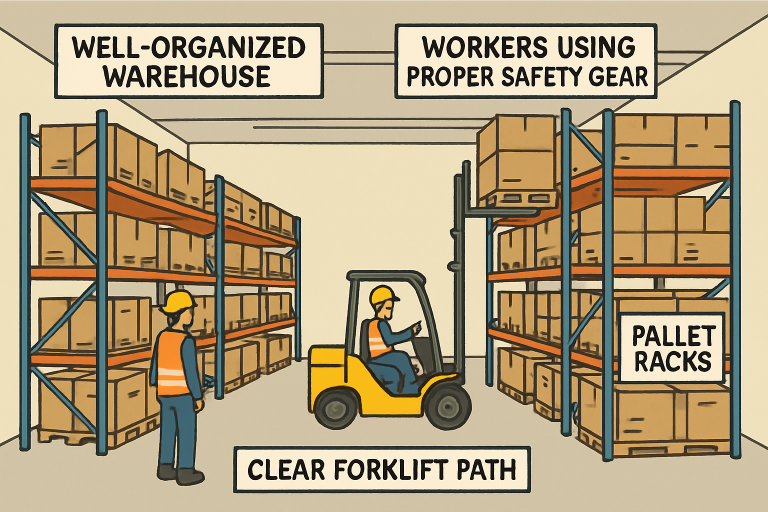
Optimal warehouse operation hinges on routine inspection and upkeep of racking systems. Regular visual checks help spot hazards such as rust, damaged beams, bent uprights, or issues with casters before they escalate into costly repairs or cause injuries. Establish a documented inspection schedule and immediately address any deficiencies to prevent small issues from becoming large liabilities. Protective devices, such as upright guards and end-of-row barriers, can reduce damage from forklifts or pallet jacks. Ensuring that casters are properly maintained and functioning also contributes to safe and efficient movement of stored items. Enforcing a strict policy for reporting and documenting rack damage empowers employees to take an active role in maintaining a safe workspace. The Occupational Safety and Health Administration (OSHA) provides guidelines for warehouse safety, offering valuable resources for compliance and best practices.
Training Staff on Best Practices
Even the best-designed warehouse can only reach its full potential if employees are properly trained. Develop a robust training program that covers the basics—pallet stacking, correct load limits, and proper equipment use—alongside advanced skills like inventory management and safe operation of lifts.
Regular refresher training and clear signage near racking can reinforce correct procedures. When employees understand why certain protocols exist, they’re more likely to comply, leading to fewer accidents and improved morale. Safety briefings and scenario-based drills help instill a culture of vigilance and shared responsibility for maintaining a safe workplace.
Implementing Efficient Slotting Techniques
Smart slotting is a proven way to improve picking efficiency and streamline order fulfillment. Grouping fast-moving SKUs in accessible positions and organizing by product velocity minimizes the distance staff must travel, which translates to faster cycle times and less labor spent retrieving orders.
Conduct regular ABC analyses to reevaluate what’s most frequently accessed and update the placement of inventory accordingly. Flexible slotting also helps when launching new products or responding to shifts in demand, keeping your warehouse agile in the face of market changes.
Integrating Technology for Enhanced Efficiency
Adopting modern technology elevates warehouse management from manual processes to optimized, automated operations. Inventory management software provides real-time visibility into stock levels, locations, and movement, dramatically reducing errors and stockouts. Barcode scanning and RFID tagging not only accelerate item location but also support more accurate cycle counts and traceability.
Advanced solutions, such as automated storage and retrieval systems (AS/RS) or cloud-based warehouse management systems (WMS), are especially valuable for high-volume operations, ensuring that every inch of storage is utilized productively. Technology also supports predictive analytics, helping businesses forecast future needs and plan warehouse adjustments proactively.
Choosing the Right Racking System
No single racking system fits every warehouse. Push-back racks provide high-density storage ideal for limited space, while selective racking offers straightforward access for fast-moving products. Pallet flow racks utilize gravity to move products forward, reducing picking times, whereas drive-in or drive-thru racks maximize space when the SKU count is lower but the pallet count is high.
Evaluate rack choices based on load characteristics and picking methods to optimize storage efficiency. Consider durability, installation complexity, and compatibility with existing material handling equipment to ensure your new racking integrates seamlessly into daily operations.
Adapting to Changing Needs
Growth, evolving product lines, and shifting market demands require adaptability in your warehouse strategy. Modular or reconfigurable racking can be easily expanded, reduced, or rearranged as storage needs fluctuate. This flexibility also simplifies the accommodation of new technologies or changing workflows, ensuring you can respond to business opportunities without downtime or costly renovations.
Forward-thinking warehouse optimization centers on nimbleness as much as efficiency. With the right systems in place, organizations can continue to serve customers reliably even as expectations and inventory profiles evolve.
Prioritizing safety, adaptability, and the effective use of smart technology enables you to create a warehouse environment that is primed for future growth, supports smooth daily operations, and fosters a safer, more confident workforce.
Conclusion
Safe and smart storage practices, utilizing pallet racks, are crucial for maintaining efficient, organized, and risk-free warehouse operations. By combining proper load management, regular inspections, and strategic layout planning, businesses can optimize space utilization while safeguarding both inventory and personnel. Investing in practical storage strategies not only improves workflow but also supports long-term productivity and safety. With the right approach, pallet racks can become a powerful tool for optimizing warehouse performance.